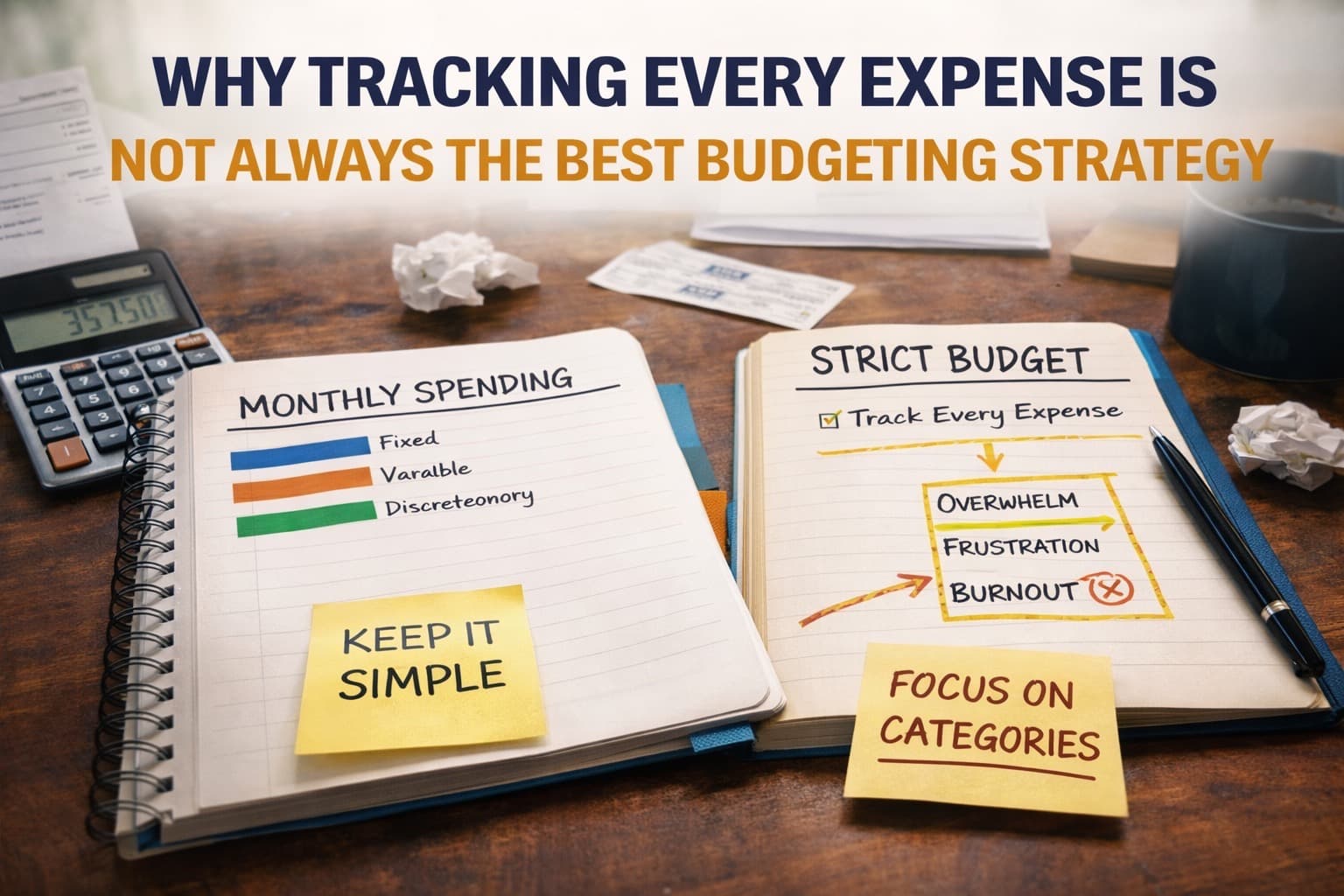
How to Categorize Expenses Correctly Without Creating Too Many Buckets
Learn how to build expense categories that stay simple, useful, and sustainable over time.
Expense tracking often becomes difficult not because people stop caring about their finances, but because their tracking system becomes too detailed too early. A structure that begins with good intentions can quickly become frustrating when every purchase starts demanding classification, interpretation, and repeated decisions that feel unnecessary in everyday life. Many people believe that stronger financial awareness requires a large number of categories. In reality, too many buckets often create the opposite effect: hesitation, inconsistency, and eventually abandonment of the system altogether. A strong expense structure should make spending easier to understand without forcing every transaction into excessive detail. Expense categories work best when they remain useful rather than overly precise. If tracking itself already feels inconsistent, Why Expense Tracking Fails for Most People explains why many systems lose momentum. Review timing also plays a major role, which is explored in Weekly vs Monthly Expense Review: Which One Helps You Stay in Control?.
Too Many Categories Create Daily Friction Faster Than Most People Expect
At the beginning, detailed categories often feel productive. Separate sections for coffee, restaurants, snacks, subscriptions, pharmacy, online purchases, transport variations, entertainment types, and irregular purchases seem precise and organized. The problem appears after several ordinary weeks. A simple grocery payment suddenly contains household items, food, hygiene products, and one unexpected purchase. A transport payment includes parking and fuel. An online purchase includes both a practical item and something discretionary. Once transactions stop fitting neatly into narrow buckets, the system begins creating small decisions repeatedly. That friction is what usually weakens consistency. The strongest systems reduce decisions rather than multiply them.
Broad Categories Usually Create Better Long-Term Visibility
Most people understand spending patterns clearly enough when categories remain broad. Housing generally includes rent, mortgage, service charges, and related fixed obligations. Utilities usually include electricity, water, heating, internet, and phone services. Food can cover groceries, routine food purchases, and ordinary household consumption. Transport usually includes fuel, tickets, parking, and transport-related maintenance. Personal spending often captures discretionary expenses that do not require deeper division unless a clear pattern appears. Irregular expenses become especially important because they catch many transactions that otherwise distort ordinary monthly categories. Broad categories make spending visible without creating constant categorization fatigue.
Categories Should Reflect Decision Value, Not Transaction Detail
A useful question when building categories is simple: Will separating this spending change future decisions meaningfully? If separating dining out from groceries changes how spending decisions are understood, that separation may be useful. If dividing subscriptions into five separate digital categories changes nothing practically, the extra detail usually creates unnecessary work. Categories should exist only where they improve financial understanding enough to influence decisions later. Otherwise the structure becomes administrative rather than useful.
Irregular Expenses Need Their Own Space
One reason many expense systems feel inaccurate is that irregular purchases quietly distort ordinary monthly categories. Medical payments, gifts, repairs, school-related costs, seasonal clothing, household replacements, travel adjustments, and occasional administrative costs often appear suddenly and make normal months look misleading. Without a dedicated irregular category, people often believe ordinary categories are unstable when in reality irregular spending is simply being absorbed invisibly. A visible irregular bucket creates much stronger monthly clarity. It also helps explain why some months naturally feel heavier without suggesting that ordinary spending has changed dramatically.
Categories Can Expand Later if Needed
Many people believe categories must be perfectly designed from the start. In reality, strong systems usually begin simply and expand only after patterns become visible. If food consistently feels unclear after several months, it may become useful to separate groceries from eating out. If transport costs vary heavily, separating fuel from public transport may help. The key is expansion based on observed patterns, not theoretical perfection. This makes the system adapt naturally rather than becoming complicated immediately.
Simplicity Usually Creates Better Financial Consistency
A slightly simplified system maintained for years usually creates stronger financial understanding than a highly detailed system used for only a short period. The goal of categorization is not perfect accounting. It is practical visibility. If categories remain simple enough that monthly review feels easy, spending patterns become much easier to understand over time. That consistency creates better decisions than excessive precision ever does.