How to Budget for Savings and Make Real Financial Progress
Learn how to budget for savings the right way—so leftover money turns into real progress, not wishful thinking or guilt.
Most people want to save money.
Very few actually do it consistently.
Not because they don't earn enough—but because savings is treated as whatever is left at the end of the month. And at the end of most months, there's nothing left.
If you want savings to turn into real progress, savings can't be an afterthought. It has to be part of the plan.
This guide shows you how to budget for savings in a realistic, sustainable way, even if your income isn't perfect or your expenses fluctuate.
Why "saving what's left" doesn't work
The idea sounds reasonable: "I'll save whatever I don't spend."
In reality:
- Expenses expand
- Small purchases add up
- Unexpected costs appear
- Motivation fades
What's left is usually zero. Saving works when it's intentional, not accidental.
Step 1: Redefine what savings actually is
Savings isn't just:
- Emergency funds
- Retirement
- Long-term investing
Savings also includes:
- Upcoming expenses
- Short-term goals
- Planned purchases
When you redefine savings as future spending with intention, it becomes easier to commit to.
Step 2: Choose your savings priorities (don't save for everything)
Trying to save for everything at once leads to frustration. Instead, focus on 1–3 priorities at a time.
Common priorities
- Emergency fund
- Vacation
- Home repairs
- Car replacement
- Education
- Reducing financial stress
If everything is a priority, nothing is.
Step 3: Pay yourself first (even if it's small)
"Pay yourself first" doesn't mean saving a huge amount. It means:
- Savings happens before discretionary spending
- The amount is realistic
- It's treated like a non-negotiable bill
Even €25–€50/month matters if it's consistent. Progress comes from habit, not size.
Step 4: Separate savings into clear buckets
One big "savings" category feels abstract. Buckets create motivation.
Common savings buckets
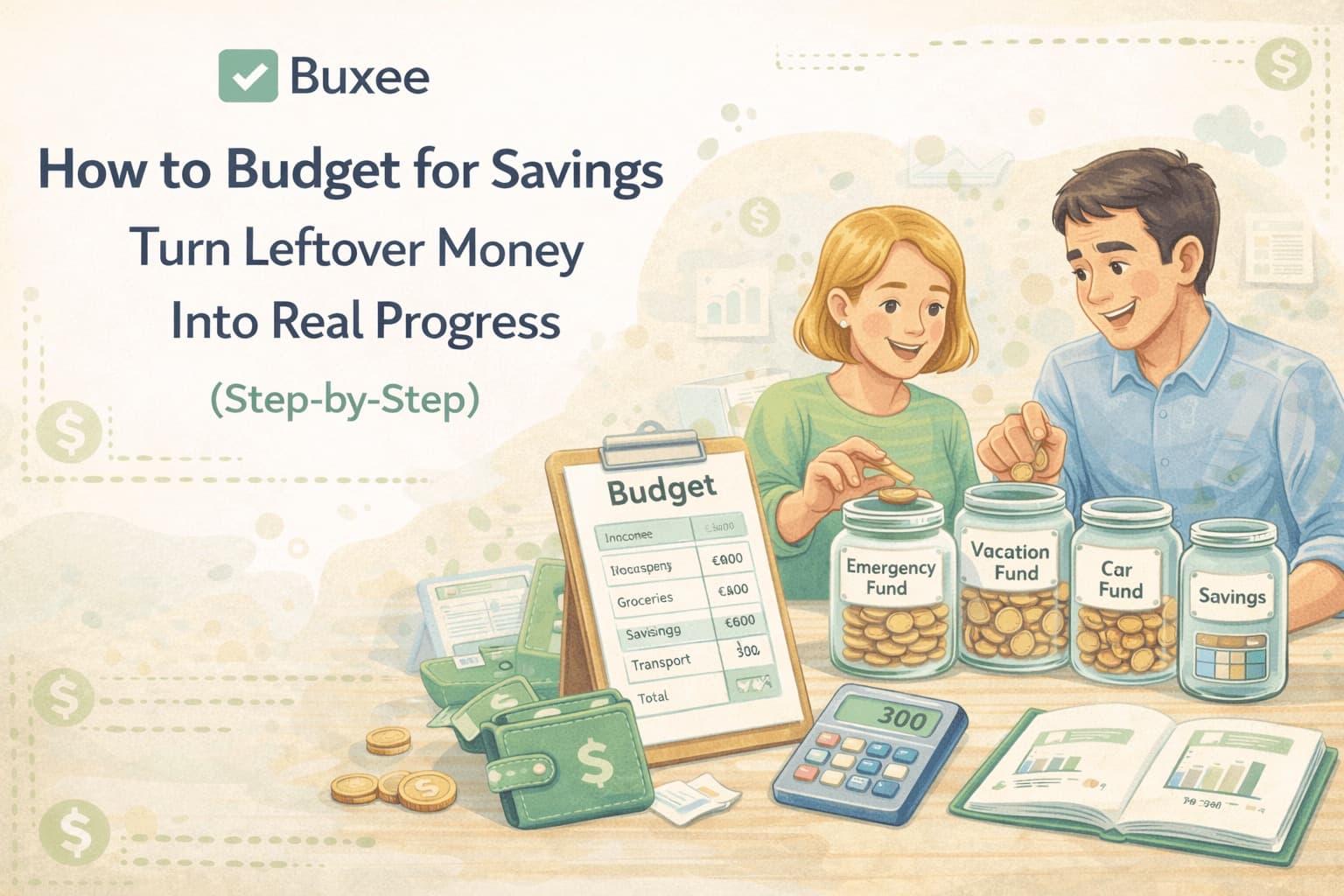
- Emergency fund
- Short-term goals (travel, gifts)
- Sinking funds (car, home, medical)
- Long-term goals
When money has a name, it's less tempting to spend.
Step 5: Use sinking funds to stop sabotaging savings
Many people "save" one month and wipe it out the next. Why? Because irregular expenses weren't planned.
Sinking funds fix this.
Examples
- €600 yearly car insurance → €50/month
- €480 school costs → €40/month
- €1,200 home repairs → €100/month
Now those expenses don't destroy your savings.
Step 6: Budget savings as a category (not a leftover)
Savings should appear in your budget structure like rent or groceries.
Example
- Income: €3,000
- Savings: €250
- Remaining money gets budgeted after
This simple shift changes everything.
Step 7: Adjust savings during hard months (don't quit)
Bad months happen. A sustainable savings plan:
- Allows temporary reductions
- Doesn't require perfection
- Resumes automatically
Reducing savings for one month is not failure. Quitting entirely is.
Step 8: Track progress visually
Savings feels slow when progress is invisible. Make it visible:
- Monthly totals
- Goal percentages
- Milestones
Tracking expenses consistently builds discipline that boosts your financial progress considerably.
Example: Realistic savings budget
Monthly income: €3,200
Savings categories
- Emergency fund: €150
- Vacation fund: €80
- Car sinking fund: €70
**Total savings: €300 (≈9%)**
That's not extreme—but over a year:
- €3,600 saved
- Fewer financial surprises
- Much lower stress
Common savings mistakes (and fixes)
"I don't earn enough to save."
Fix: Start with very small amounts. Consistency matters more than size.
"I save, then spend it."
Fix: Create separate buckets and sinking funds.
"Saving feels pointless."
Fix: Attach savings to specific goals, not vague ideas.
"I stop saving when things get tight."
Fix: Reduce temporarily, don't abandon the system.
Savings isn't about restriction - it's about freedom
Saving money isn't about depriving yourself. It's about:
- Fewer emergencies
- More choices
- Less stress
- Feeling in control
When savings is part of your budget—not an afterthought—it becomes progress you can actually feel.