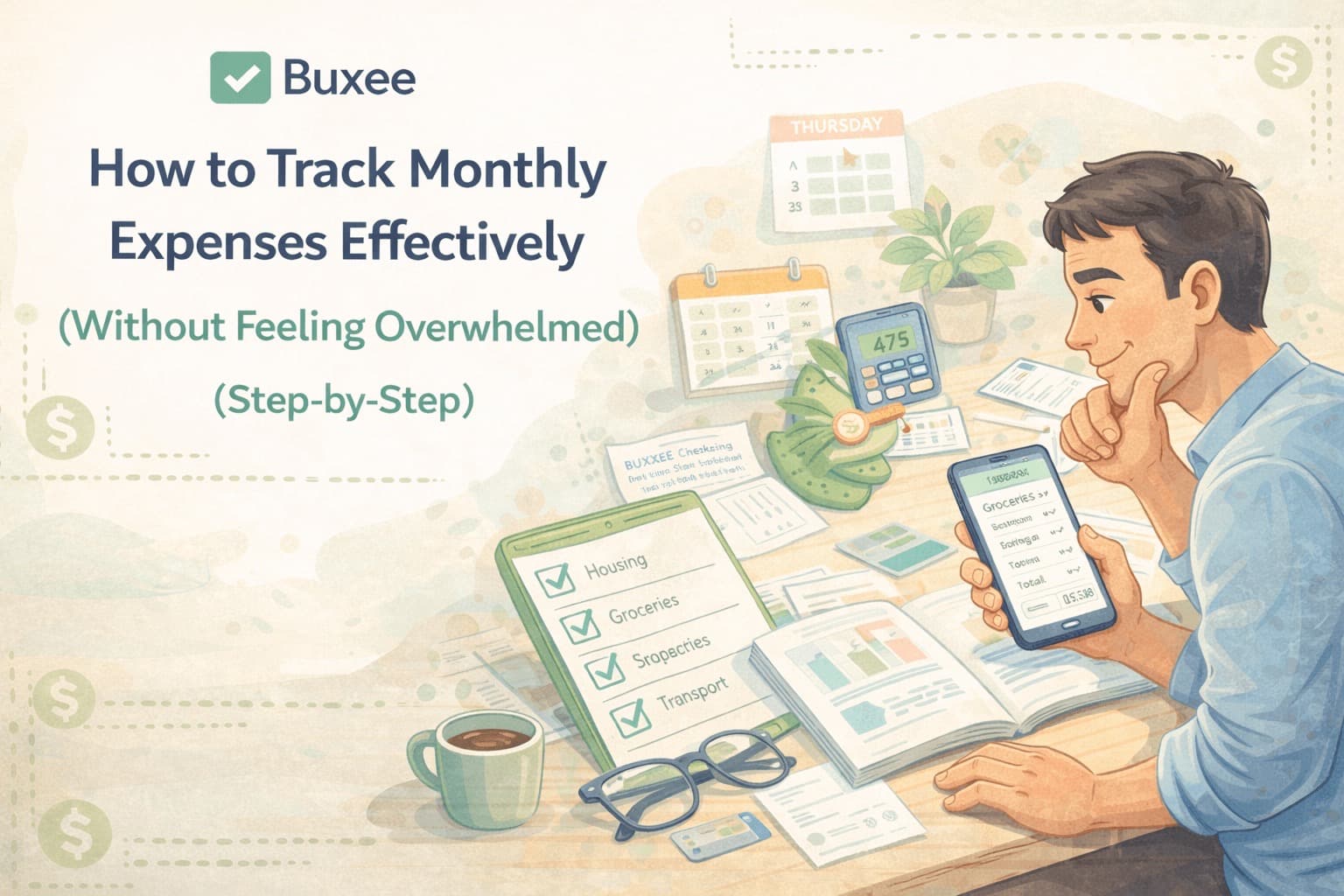
How to Track Monthly Expenses Without Feeling Overwhelmed
A simple, low-stress way to track monthly expenses, stay consistent, and understand your spending without burnout.
Expense tracking has a bad reputation.
People imagine endless spreadsheets, daily logging, and guilt over every coffee. So they start strong… and quit fast.
But effective expense tracking isn't about control or perfection. It's about awareness. When done right, it reduces stress instead of creating it.
This guide shows you how to track your monthly expenses in a simple, realistic way—one you can actually maintain without feeling overwhelmed.
Why most people quit expense tracking
Expense tracking fails when it:
- Requires daily effort
- Uses too many categories
- Demands perfection
- Feels judgmental
- Turns into unpaid accounting work
The goal isn't to record every cent forever.
The goal is to understand your spending patterns well enough to make better decisions.
Step 1: Decide what "tracking" means for you
Tracking expenses doesn't have to be all-or-nothing.
Choose your level:
Level 1: Awareness tracking (best for beginners)
- Track totals per category
- Review weekly
- No need to log purchases instantly
Level 2: Habit tracking
- Track most spending
- Focus on problem categories
- Review weekly + monthly
Level 3: Detailed tracking
- Track nearly everything
- Useful short-term (1–2 months)
- Not required long-term
Most people only need Level 1 or 2 to see results.
Step 2: Use fewer categories than you think you need
Too many categories create friction.
Instead of:
- "Coffee"
- "Lunch"
- "Dining out"
- "Snacks"
Use:
- Eating out
Instead of:
- "Toilet paper"
- "Cleaning supplies"
- "Soap"
Use:
- Household supplies
A strong starting point (10–12 categories)
- Housing
- Utilities
- Groceries
- Eating out
- Transport
- Shopping
- Personal
- Kids / Family
- Subscriptions
- Savings
- Irregular bills
- Buffer
You can always split categories later. Start simple.
Step 3: Track from real transactions (not memory)
Relying on memory is exhausting and inaccurate.
Instead, use:
- Bank statements
- Card transactions
- App exports
Once or twice a week:
- Review transactions
- Assign them to categories
- Move on
Tracking is much easier when it's scheduled, not constant. Being consistent with it you can turn tracked expenses into savings.
Step 4: Pick a rhythm you can keep
Daily tracking burns people out.
A better system:
Weekly check-in (10 minutes)
- Review category totals
- Spot issues early
Monthly review (20–30 minutes)
- Adjust categories
- Learn patterns
- Improve next month
Consistency beats intensity every time.
Step 5: Focus on trends, not individual purchases
One expensive grocery trip doesn't matter.
What matters:
- Average spending
- Repeating patterns
- Categories that constantly exceed limits
Ask better questions:
- "Why is this category always tight?"
- "What expenses surprise me every month?"
- "Which costs bring the least value?"
Expense tracking is about insight, not self-criticism.
Step 6: Separate fixed vs flexible expenses
This reduces overwhelm immediately.
Fixed expenses
- Rent/mortgage
- Insurance
- Subscriptions
- Loan payments
These rarely change. Track them once.
Flexible expenses
- Groceries
- Eating out
- Shopping
- Entertainment
These deserve your attention. That's where behavior matters.
Step 7: Expect inconsistency (and plan for it)
You will forget to track sometimes.
That's normal.
A sustainable system:
- Allows gaps
- Doesn't punish missed days
- Lets you catch up weekly
If missing entries makes you want to quit, the system is too rigid.
Step 8: Use expense tracking to support your budget
Tracking alone doesn't fix finances.
It works best when connected to:
- Monthly budget plan
- Savings goals
- Spending limits
Expense tracking answers: "Where did my money go?"
Budgeting answers: "Where do I want it to go next?"
Together, they create control.
Example: Stress-free expense tracking in real life
Instead of:
- Logging every purchase instantly
- Checking the app multiple times per day
Try:
- One weekly review
- Category totals only
- Simple adjustments
Result:
- Less guilt
- More clarity
- Better decisions
Common expense tracking problems (and fixes)
"I forget to track."
Fix: Weekly scheduled review instead of daily logging.
"It feels overwhelming."
Fix: Fewer categories + focus on totals.
"I feel guilty seeing my spending."
Fix: Treat tracking as data, not judgment.
"I quit after a few weeks."
Fix: Lower effort required. The easier it is, the longer it lasts.
Expense tracking should make life easier
If tracking expenses increases stress, it's failing its job.
A good system:
- Saves mental energy
- Creates clarity
- Helps you plan
- Supports long-term habits
Start small. Stay consistent. Improve gradually.
That's how expense tracking actually works with Buxee.