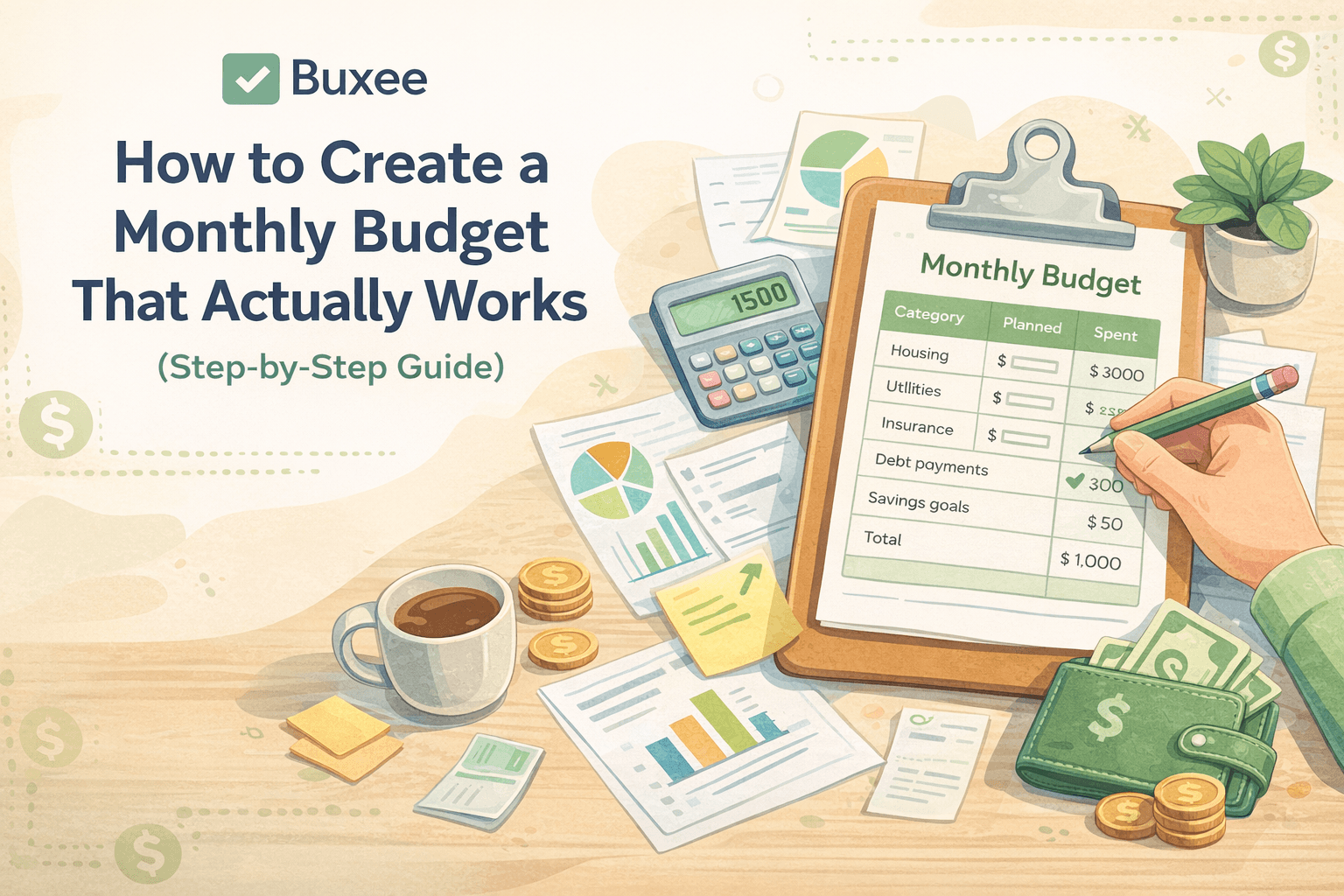
Jak stworzyć budżet miesięczny, który naprawdę działa (krok po kroku)
Praktyczny przewodnik krok po kroku po budowaniu budżetu miesięcznego, którego naprawdę się utrzymasz - prawdziwe przykłady, kategorie i sposoby na typowe problemy.
Autor: zespół Buxee
Większość budżetów upada z nudnego powodu: buduje się je jak arkusz kalkulacyjny, a życie arkuszem nie jest.
Budżet, który działa, to mniej kwestia "idealnej matematyki", a bardziej system, który da się prowadzić nawet w zmęczony wtorek. Powinien być realistyczny, elastyczny i trochę wyrozumiały - a przy tym wciąż pomagać Ci robić postępy.
Ten przewodnik przeprowadzi Cię przez prostą metodę krok po kroku, jak stworzyć budżet miesięczny, którego naprawdę będziesz się trzymać (niezależnie od tego, czy planujesz budżet solo, czy budżet jako rodzina). Dostaniesz też pomysły na kategorie, prawdziwe przykłady oraz rozwiązania typowych problemów, które rozsadzają budżety.
Jak wygląda "działający" budżet miesięczny
Działający budżet spełnia trzy zadania:
- Pokrywa rzeczy niezbędne (mieszkanie, jedzenie, rachunki) bez ciągłego stresu.
- Sprawia, że wydatki stają się widoczne, więc nie zgadujesz.
- Tworzy plan na postępy (budżetowanie na oszczędności, spłata długów, przyszłe cele).
To nie kara. To plan.
Krok 1: Wybierz swój styl budżetu (prosty wygrywa z wymyślnym)
Zanim zaczniesz wpisywać liczby, wybierz strukturę, która pasuje do Twojej osobowości. Jeśli pierwszego dnia wyda się skomplikowana, nie przetrwa trzeciego tygodnia.
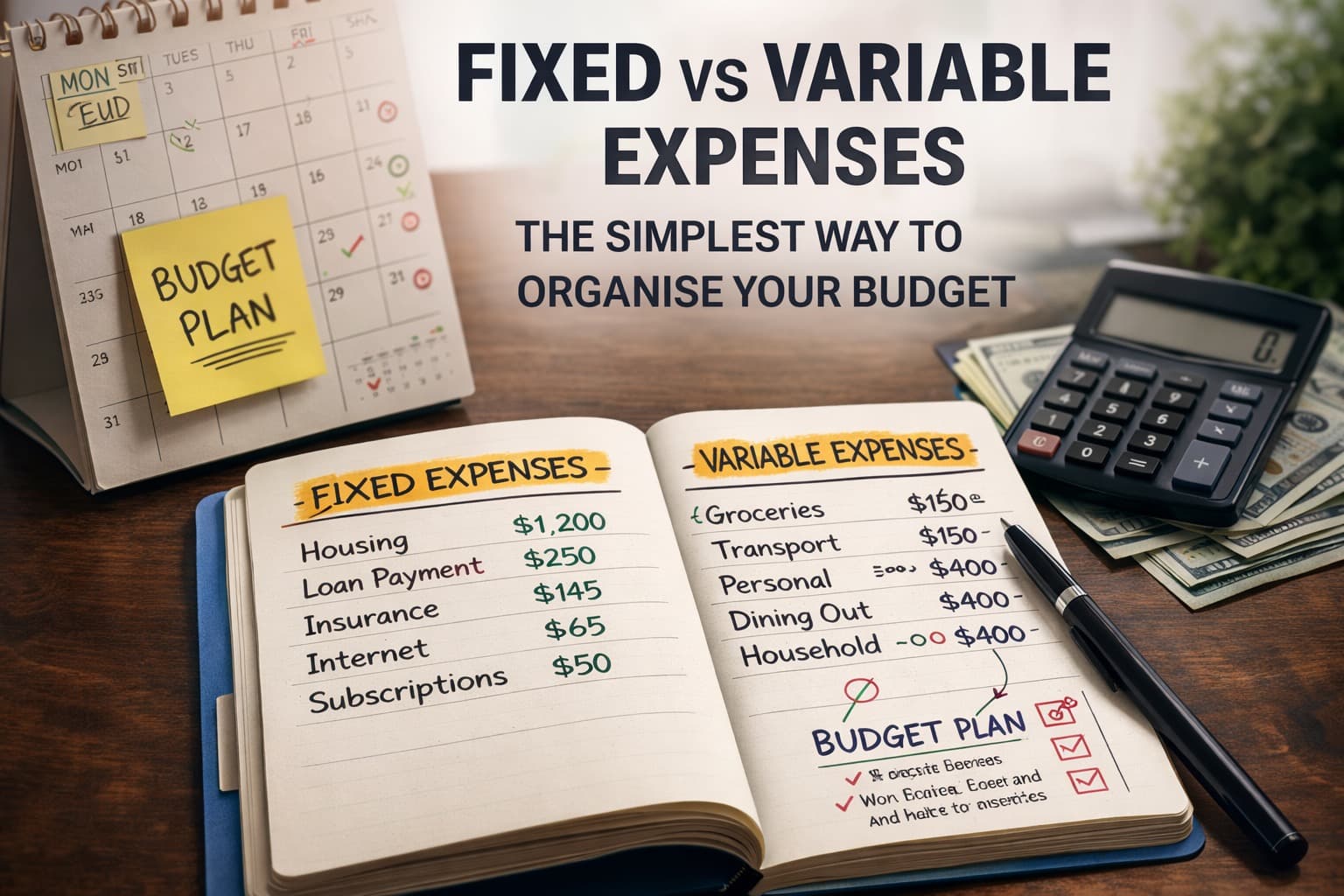
Opcja A: Budżet "Stałe + Elastyczne" (najlepszy dla większości osób)
- Stałe = rachunki, które niewiele się zmieniają (czynsz, raty kredytów, ubezpieczenie)
- Elastyczne = kategorie, które się wahają (zakupy spożywcze, paliwo, jedzenie na mieście, rozrywka)
Ustalasz limity dla elastycznych kategorii i dostosowujesz je w razie potrzeby.
Opcja B: Reguła 50/30/20 (dobra, jeśli chcesz mieć ramy)
Klasyczna wskazówka:
- 50% potrzeby
- 30% zachcianki
- 20% oszczędności/spłata długów
To pomocny punkt wyjścia, ale nie wciskaj się w niego na siłę, jeśli sam czynsz to 45%. Wiele osób potrzebuje najpierw okresu "70/20/10", zanim dojdzie do "50/30/20".
Opcja C: Budżetowanie zerowe (dobre, jeśli lubisz kontrolę)
Każda złotówka ma swoje zadanie. Dochód minus wydatki minus oszczędności równa się zero.
To może być potężne narzędzie, ale wymaga więcej pracy. Jeśli dopiero zaczynasz, zacznij od Stałe + Elastyczne i rozwijaj się później.
Krok 2: Wyznacz granice swojego "miesiąca budżetowego"
Zdecyduj, co "miesięczny" oznacza dla Ciebie.
- Miesiąc kalendarzowy (od 1. do 30./31.) jest najprostszy.
- Od wypłaty do wypłaty działa lepiej, jeśli rachunki pokrywają się z terminami wypłat.
- Hybryda: śledź miesięcznie, ale rób przegląd co tydzień.
Jeśli masz partnera, uzgodnijcie razem jeden system, by skutecznie śledzić miesięczne wydatki - inaczej będziecie ciągle kłócić się o to, co liczy się "do tego miesiąca".
Krok 3: Oblicz swój rzeczywisty dochód miesięczny
Tutaj większość osób przypadkiem sabotuje samych siebie, używając liczby, która dobrze wygląda, a nie liczby, która jest wiarygodna.
Jeśli masz stałą pensję
Użyj dochodu netto (po podatkach), który faktycznie wpływa na Twoje konto.
Jeśli Twój dochód się zmienia
Użyj ostrożnego punktu wyjścia:
- Spójrz na ostatnie 3–6 miesięcy.
- Weź najniższy miesiąc (albo średnią pomniejszoną o 10–15%).
- Planuj budżet na podstawie tej liczby.
- Wszystko ponad to traktuj jako "bonus" (oszczędności, spłata długów, poduszka finansowa).
To zapobiega cyklowi "świetny miesiąc → przesadzone wydatki → miesiąc paniki".
Krok 4: Wypisz swoje wydatki, których nie da się uniknąć (rachunki, które musisz zapłacić)
Najpierw zapisz swoje stałe miesięczne zobowiązania.
Typowe stałe kategorie:
- Czynsz / kredyt hipoteczny
- Media (jeśli są przewidywalne)
- Ubezpieczenia (zdrowotne, samochodowe, mieszkania)
- Raty kredytów
- Telefon/internet
- Opieka nad dziećmi
- Subskrypcje, których naprawdę używasz
- Bilet komunikacji miejskiej
- Opłaty szkolne
**Wskazówka:** W przypadku rachunków, które przychodzą kwartalnie/rocznie (ubezpieczenie samochodu, podatek od nieruchomości), podziel je przez 12 i wpisz do budżetu miesięcznie. To zmienia zasady gry.
**Przykład:** Ubezpieczenie samochodu €600/rok → €50/miesiąc w kategorii "Rachunki roczne"
Krok 5: Prześledź swoje wydatki raz (żeby przestać zgadywać)
Nie musisz śledzić każdego grosza na zawsze, ale raz musisz zderzyć się z rzeczywistością.
Zrób to za ostatnie 30 dni:
- Transakcje na koncie bankowym
- Wyciągi z kart
- Wydatki gotówkowe (oszacuj uczciwie)
Następnie pogrupuj transakcje w kategorie. Nie kombinuj za bardzo - na początku trzymaj kategorie szerokie.
Częste elastyczne kategorie:
- Zakupy spożywcze
- Jedzenie na mieście / kawa
- Transport (paliwo, przejazdy)
- Artykuły gospodarstwa domowego
- Higiena osobista
- Dzieci (ubrania, zajęcia)
- Rozrywka
- Zakupy
- Zdrowie (leki, dopłaty)
- Prezenty
To krok, na którym ludzie odkrywają:
- "Wydajemy na jedzenie z dostawą więcej, niż myśleliśmy"
- "Subskrypcje po cichu nas drenują"
- "Drobne zakupy szybko się sumują"
Żadnego wstydu - tylko dane.
Krok 6: Wybierz swoje kategorie (zachowaj prostotę)
Budżet działa, gdy potrafisz go szybko zrozumieć.
Dobrze ułożony zestaw kategorii ma:
- 10–15 kategorii łącznie (dla większości gospodarstw domowych)
- Wyraźną różnicę między potrzebami a zachciankami
- Jedną kategorię, która wchłania chaos: poduszkę
Rekomendowany szablon kategorii (osobisty lub rodzinny)
**Niezbędne**
- Mieszkanie
- Media
- Zakupy spożywcze
- Transport
- Ubezpieczenia
- Spłata długów
**Styl życia**
- Jedzenie na mieście
- Rozrywka
- Zakupy
- Higiena osobista
**Cele**
- Fundusz awaryjny
- Cele oszczędnościowe (wyjazd, samochód, mieszkanie)
- Inwestycje (opcjonalnie)
**Inne**
- Prezenty
- Wydatki medyczne
- Rachunki roczne
- Poduszka / Różne
Jeśli planujesz budżet z partnerem, dodaj:
- "Wspólne wydatki domowe"
- "Wydatki osobiste (Ty)"
- "Wydatki osobiste (partner)"
Ta jedna zmiana mocno ogranicza konflikty - każdy dostaje swój mały budżet wolny od poczucia winy.
Krok 7: Ustal realistyczne limity (sposób "mniej złości")
Zamiast bezlitośnie tnąć kategorie, zacznij od tego, ile dotąd wydawałeś - a potem stopniowo zaciskaj pas.
Praktyczna metoda:
- Weź sumy wydatków z 30 dni dla każdej kategorii.
- Zmniejsz największą kategorię z "przeciekiem" o 10–20%.
- Te pieniądze przeznacz na cel (oszczędności/spłata długów).
- Powtórz w kolejnym miesiącu.
Dzięki temu unikasz klasycznego błędu: "Od jutra zaczynamy wydawać na jedzenie o połowę mniej". Nie, nie zaczniecie. Ale możecie wydać o 10% mniej i utrzymać to na dłużej.
Krok 8: Dodaj sekretny składnik: poduszkę
Jeśli Twój budżet nie ma poduszki, jedna niespodzianka go rozwali - a wtedy przestaniesz ufać całemu systemowi.
Dodaj jedno z poniższych:
- Poduszka / Różne (2–5% dochodu)
- Fundusz awaryjny (jeśli masz już podstawową poduszkę)
- Fundusze celowe na nieregularne koszty (naprawy samochodu, urodziny, sprawy szkolne)
Dla rodzin nieregularne koszty to nie są "niespodzianki". One są pewne. Zaplanuj je w budżecie.
Krok 9: Spraw, by łatwo było go prowadzić (cotygodniowe przeglądy biją codzienne śledzenie)
Budżet upada, gdy wymaga zbyt wiele uwagi.
Lepszy rytm:
**Raz w tygodniu (10 minut):**
- Sprawdź sumy dla każdej kategorii
- Wprowadź drobne korekty
- Zaplanuj kolejny tydzień (duże zakupy spożywcze, nadchodzące rachunki)
**Raz w miesiącu (20–30 minut):**
- Przejrzyj, co zadziałało
- Zaktualizuj limity kategorii
- Ustal jeden priorytetowy cel
Jeśli korzystasz z narzędzia takiego jak Buxee, celem jest widzieć swoje kategorie na pierwszy rzut oka, a nie prowadzić księgowość każdego dnia.
Krok 10: Zdecyduj, co się dzieje, gdy przekroczysz budżet
Przekroczenie budżetu to nie porażka moralna. To informacja zwrotna.
Wybierz zasadę, zanim to się stanie:
- Jeśli kategoria przekroczy limit, przenosisz pieniądze z Poduszki
- Albo zmniejszasz inną kategorię (np. "Jedzenie na mieście" pokrywa "Zakupy")
- Albo dopuszczasz niewielkie przekroczenie, ale zaciskasz pas w kolejnym tygodniu
Kluczem jest konsekwencja. Budżet to plan z zasadami, których trzymasz się nawet wtedy, gdy robi się bałagan.
Przykładowy budżet miesięczny (prosty i realistyczny)
Powiedzmy, że dochód netto Twojego gospodarstwa domowego wynosi €3000/miesiąc.
Niezbędne
- Mieszkanie: €1100
- Media: €200
- Zakupy spożywcze: €450
- Transport: €200
- Ubezpieczenia: €150
- Spłata długów: €250
**Suma częściowa: €2350**
Styl życia
- Jedzenie na mieście: €150
- Rozrywka: €80
- Zakupy: €100
- Higiena osobista: €70
**Suma częściowa: €400**
Cele
- Fundusz awaryjny: €150
- Cel oszczędnościowy: €50
**Suma częściowa: €200**
Inne
- Prezenty: €30
- Rachunki roczne: €50
- Poduszka: €−30 (dostosuj do rzeczywistości)
W prawdziwym życiu będziesz przesuwać liczby, aż wszystko się zbilansuje. Chodzi o to, by budżet był zrozumiały i wykonalny.
Typowe problemy (i ich rozwiązania)
Najczęstsze powody, dlaczego wiele budżetów upada w prawdziwym życiu:
"Mój budżet nigdy nie pasuje do prawdziwego życia."
**Rozwiązanie:** Twoje kategorie są zbyt wyidealizowane. Użyj ostatnich 30 dni jako punktu wyjścia, a potem stopniowo poprawiaj.
"Zakupy spożywcze zawsze rozsadzają nasz plan."
**Rozwiązanie:** Podziel zakupy spożywcze na:
- Zakupy spożywcze (jedzenie podstawowe)
- Artykuły gospodarstwa domowego (środki czystości, kosmetyki)
To daje przejrzystość zamiast zamętu.
"Ciągle dopadają nas niespodziewane wydatki."
**Rozwiązanie:** Dodaj fundusze celowe:
- Naprawy samochodu
- Wydatki medyczne
- Dzieci
- Utrzymanie domu
Nawet €30–€50/miesiąc na każdy fundusz pomaga.
"Jestem niekonsekwentny, bo śledzenie wydatków jest irytujące."
**Rozwiązanie:** Śledź co tydzień, a nie codziennie. Budżet to plan miesięczny z cotygodniowym sterowaniem.
"Budżetowanie wydaje się ograniczające."
**Rozwiązanie:** Stwórz kategorię "rozrywka", która jest dozwolona i wolna od poczucia winy. Budżet, który zakazuje przyjemności, szybko się sypie.
Budżet, który działa, to taki, który możesz powtarzać
Najlepszy budżet to nie ten, który pierwszego dnia wygląda idealnie. To ten, który możesz prowadzić miesiąc po miesiącu bez wypalenia.
Zacznij prosto:
- Poznaj swój dochód
- Pokryj rzeczy niezbędne
- Ustal kilka limitów kategorii
- Dodaj poduszkę
- Rób przegląd co tydzień
- Stopniowo poprawiaj
I tyle. Konsekwencja bije intensywność.
Jeśli chcesz, możesz zamienić to w powtarzalny system w Buxee, ustawiając swoje miesięczne kategorie raz, a potem co miesiąc korzystając z tej samej struktury (z drobnymi korektami).