Familjebudget på ett enkelt sätt: Sköt hushållets pengar tillsammans
En praktisk guide till familjebudget som hjälper hushåll att hantera gemensamma utgifter, minska stressen och hålla samma riktning mot de ekonomiska målen.
Av Buxee-teamet
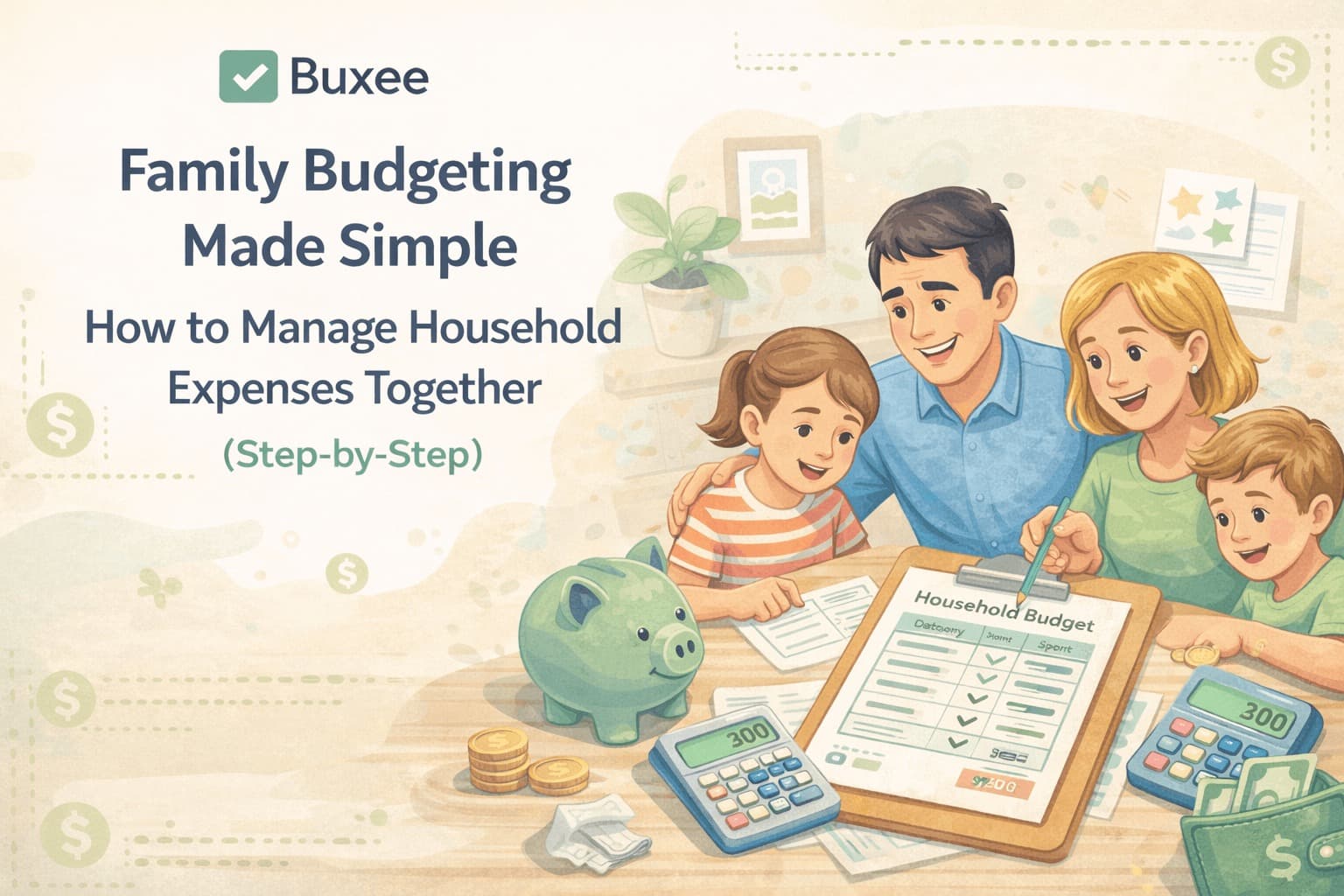
Familjebudgetar misslyckas inte för att siffrorna är fel. De misslyckas för att människor är inblandade.
Olika köpvanor. Olika prioriteringar. Olika definitioner av vad som är "nödvändigt". Lägg till barn, oregelbundna utgifter och begränsad tid – och plötsligt känns budgeteringen mer som konflikthantering än ekonomisk planering.
Den goda nyheten? Familjebudget behöver inte vara komplicerat, kontrollerande eller stressigt. Det behöver bara rätt struktur.
Den här guiden visar ett enkelt och realistiskt sätt att hantera hushållets utgifter tillsammans, oavsett om du budgeterar med en partner, en make eller maka, eller för en växande familj.
Varför familjebudget känns svårare än att budgetera ensam
När du budgeterar ensam hanterar du bara dig själv. När du budgeterar som familj hanterar du:
- Gemensamt ansvar
- Olika penningvanor
- Känslomässiga utlösare
- Kompromisser
- Långsiktiga mål (barn, boende, stabilitet)
De flesta familjebudgetar misslyckas för att de försöker behandla ett hushåll som en enda person. Det är det inte.
En fungerande familjebudget:
- Skiljer gemensamma pengar från personlig frihet
- Förutser oregelbundna familjekostnader
- Minskar antalet dagliga penningbeslut
- Skapar tydlighet i stället för kontroll
Steg 1: Bestäm vad "gemensamt" faktiskt betyder
Börja med definitioner innan ni tar fram siffror. Sätt er ner tillsammans och besvara:
- Vilka utgifter är hushållsgemensamma?
- Vilka utgifter förblir personliga?
- Vilka mål är viktiga för er båda?
Vanliga gemensamma kategorier
- Boende
- El, vatten och avlopp
- Mat
- Transport
- Försäkringar
- Barnomsorg
- Skolkostnader
- Familjeaktiviteter
- Sparmål för pengar (buffert, semester)
Vanliga personliga kategorier
- Personliga inköp
- Hobbyer
- Personliga prenumerationer
- Mindre fritt konsumtionsutrymme
Enbart den här uppdelningen tar bort en enorm mängd spänningar.
Steg 2: Välj en struktur som passar er familj
Det finns ingen enda "rätt" struktur för en familjebudget. Välj den som stämmer med hur ni redan lever.
Alternativ A: Helt gemensam budget
- All inkomst läggs i en gemensam pott
- Alla utgifter följs upp tillsammans
- Fungerar bra när inkomsterna är lika och målen är samordnade
Alternativ B: Gemensamt hushåll + personliga pengar (rekommenderas)
- Inkomsten läggs samman för hushållets utgifter
- Varje vuxen får personliga pengar
- Mest flexibelt och konfliktsäkert
Alternativ C: Proportionella bidrag
- Varje partner bidrar utifrån sin andel av inkomsten
- Gemensam månadsbudget för hushållet + personliga konton
- Användbart när inkomstnivåerna skiljer sig markant
Den bästa strukturen är den som känns rättvis, inte nödvändigtvis lika.
Steg 3: Lista alla hushållsutgifter (även de bortglömda)
Familjebudgetar går ofta sönder på grund av utgifter som "inte dyker upp varje månad". Men de dyker upp varje år.
Grundläggande hushållsutgifter
- Hyra eller bolån
- El, vatten och avlopp
- Internet och telefon
- Mat
- Transport
- Försäkringar
- Prenumerationer
Familjespecifika och oregelbundna utgifter
- Skolmaterial
- Kläder till barnen
- Vårdbesök
- Födelsedagar och helger
- Aktiviteter och lektioner
- Underhåll av hemmet
- Resor och besök hos familjen
Skapa buffertfonder för dessa:
- Uppskatta årskostnaden
- Dela med 12
- Budgetera per månad
Det förvandlar kaos till förutsägbarhet.
Steg 4: Sätt realistiska gränser per kategori (tillsammans)
Detta är inte en ensampersons beslut.
Gå igenom:
- De senaste 1–2 månadernas utgifter
- Genomsnittliga kostnader per kategori
- Områden som skapar stress (mat, barn, transport)
Kom sedan överens om:
- Vad som förblir oförändrat
- Vad som förbättras gradvis
- Vad som är viktigast just nu
En familjebudget fungerar bäst när båda kan säga: "Jag förstår den här siffran, även om jag inte älskar den."
Steg 5: Ge varje vuxen personliga pengar
Det här steget är avgörande och hoppas ofta över.
Personliga pengar:
- Är utan dåligt samvete
- Kräver inget godkännande
- Kan vara lika eller proportionella
- Minskar bråken dramatiskt
Även en liten summa hjälper: 50–150 €/månad per person kan förändra hela dynamiken
Utan detta blir varje inköp en förhandling.
Steg 6: Planera för barnen utan att gissa
Barnens utgifter underskattas ofta eftersom de är utspridda.
I stället för att reagera varje månad, skapa kategorier:
- Barnkläder
- Skola och material
- Aktiviteter och idrott
- Vård och hälsa
Om barnen är mycket små, räkna med att dessa kostnader växer. En budget bör utvecklas i takt med familjen.
Steg 7: Bygg gemensamma mål (det är detta som håller er konsekventa)
Budgetar håller när de är kopplade till något meningsfullt.
Vanliga familjemål:
- Buffert
- Semester
- Förbättringar i hemmet
- Utbildningsfond
- Minskad ekonomisk stress
- Långsiktig stabilitet
Koppla faktiska siffror till dessa mål, även om de är små till en början. Framsteg är motiverande.
Steg 8: Välj en stressfri rytm för uppföljning
Ni behöver inga dagliga uppföljningsmöten.
En hälsosam takt:
Veckovis (10 minuter):
- Kontrollera totalerna per kategori
- Upptäck problem tidigt
Månadsvis (20–30 minuter):
- Gå igenom vad som fungerade
- Justera kategorierna
- Uppdatera målen
Om ni använder ett gemensamt verktyg som Buxee bör fokus ligga på överblick, inte kontroll.
Vanliga problem med familjebudget (och lösningar)
"Vi bråkar om små inköp."
Lösning: Personliga utgiftskategorier. Icke förhandlingsbart.
"Barnens utgifter överraskar oss hela tiden."
Lösning: Buffertfonder för skola, kläder och aktiviteter.
"En person bryr sig mer om budgeteringen."
Lösning: Minska komplexiteten och fokusera på gemensamma mål, inte på perfekt uppföljning.
"Våra inkomster är ojämna."
Lösning: Proportionella bidrag eller gemensamma hushållsutgifter med personlig frihet.
"Budgeten känns begränsande."
Lösning: Budgetera för familjeglädje. En budget som tar bort glädjen överlever inte.
Exempel: Enkel struktur för en familjebudget
Hushållsinkomst: 4 200 €
Gemensamt hushåll
- Boende: 1 400 €
- El, vatten och avlopp: 300 €
- Mat: 700 €
- Transport: 300 €
- Försäkringar: 250 €
- Barnomsorg och skola: 350 €
- Prenumerationer: 100 €
Personliga pengar
- Partner A: 120 €
- Partner B: 120 €
Mål
- Buffert: 150 €
- Familjesemester: 110 €
- Buffertfond för barnen: 100 €
Buffert
- 200 €
Tydligt, rättvist, flexibelt.
Familjebudget handlar om tydlighet, inte kontroll
En bra familjebudget:
- Minskar stressen
- Förebygger överraskningar
- Gör samtal om pengar lugnare
- Stödjer lagarbete i stället för konflikt
Det handlar inte om att följa hushållets utgifter på öret. Det handlar om att veta vart hushållets pengar tar vägen och varför – det är de centrala mål som vi hjälper dig att nå med Buxee.
Börja enkelt. Justera tillsammans. Förbättra gradvis. Så får familjer budgeteringen att fungera på lång sikt.