Monthly Budget Categories Explained: What to Include and What Most People Forget
Learn how to organise monthly budget categories properly, including essential expenses, variable costs, savings, and often-forgotten spending areas that affect real-life budgeting.
Creating a monthly budget often sounds simple at first. Most people assume the difficult part is limiting spending or deciding how much to save. In reality, one of the most important parts of budgeting happens before any numbers are entered: choosing the right categories.
A budget that is built around incomplete or unrealistic categories almost always becomes difficult to follow after a few weeks. People often start with obvious expenses such as rent, groceries, and utilities, but forget that many monthly decisions happen in less visible areas. Small irregular costs, occasional subscriptions, family obligations, seasonal purchases, and personal spending all influence how realistic a budget feels in everyday life.
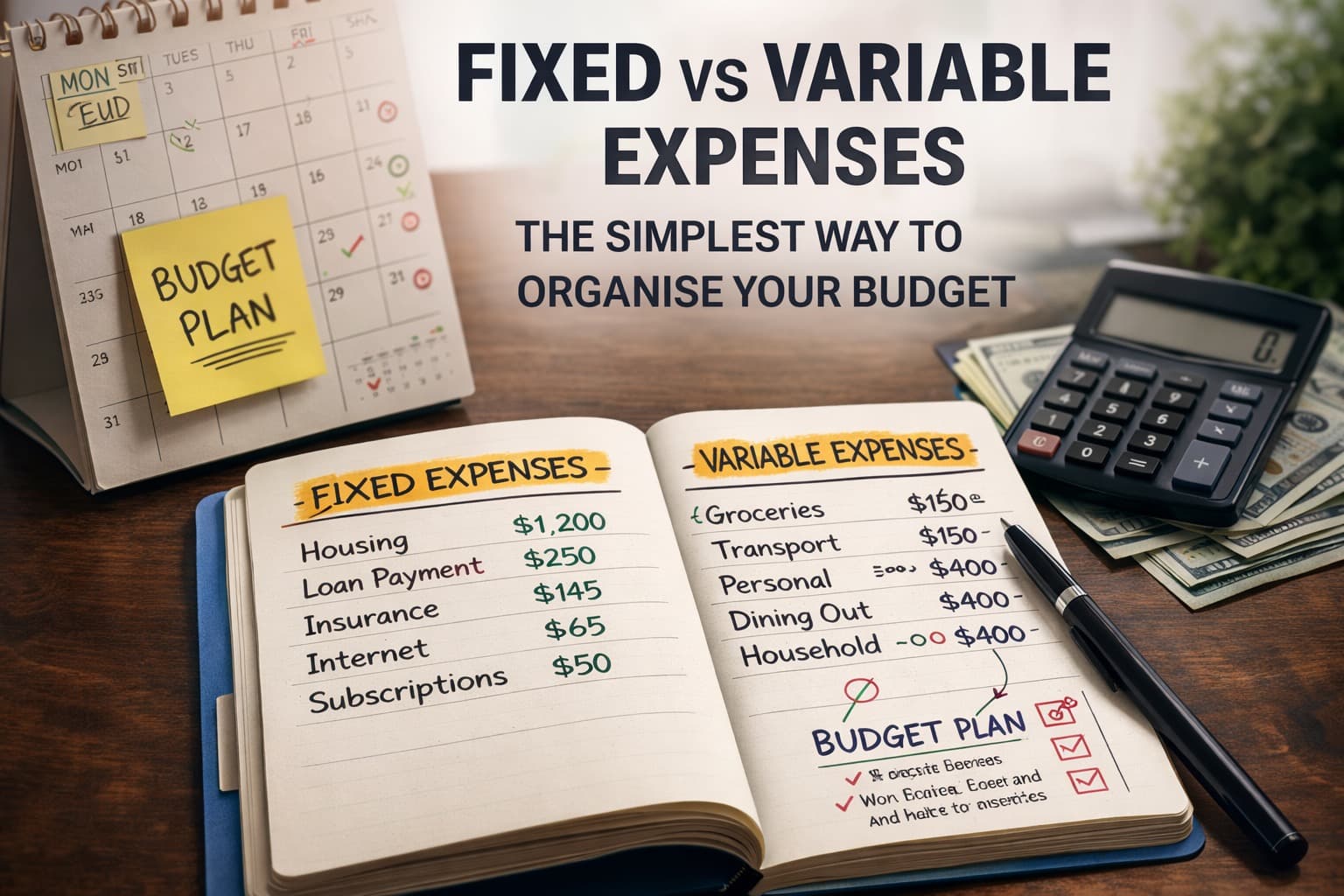
A budget becomes much easier to maintain when categories reflect how money actually moves through ordinary life. If you also want to understand why many otherwise reasonable budgets begin collapsing after only a few weeks, read Why Most Monthly Budgets Fail After 30 Days (And How to Prevent It). For a simpler way to separate recurring obligations from flexible spending, Fixed vs Variable Expenses: The Simplest Way to Organise Your Budget explains one of the most practical structures for long-term budget clarity.
The purpose of budget categories is not to make spending look organised on paper. Their real purpose is to reflect how money actually moves through your life. When categories are realistic, budgeting becomes easier because fewer expenses feel unexpected.
A good monthly budget usually combines structure with flexibility. It should separate essential obligations from lifestyle spending, but it should also leave room for irregular months, personal choices, and changing priorities.
Why Budget Categories Matter More Than Most People Realise
Many people stop budgeting not because they dislike planning, but because their first budget feels inaccurate almost immediately.
This usually happens when categories are too broad or incomplete.
For example, someone may create one category called "Household" and place groceries, cleaning products, occasional repairs, and personal items inside it. At first glance this looks organised, but after one month it becomes difficult to understand what actually increased spending.
Clear categories do not create restriction. They create visibility.
When categories are separated properly, patterns become easier to notice:
- some expenses remain stable every month
- some fluctuate naturally
- some appear only occasionally but still need attention
This visibility makes future decisions easier because the budget starts reflecting reality instead of assumptions.
The Core Monthly Budget Categories Every Household Should Include
A realistic monthly budget usually begins with essential fixed expenses.
These are the payments that tend to appear regularly and are often difficult to change quickly. Housing is usually the first and largest category, whether that means rent, mortgage payments, service charges, insurance, or property-related obligations.
Utilities should usually remain separate from housing because they fluctuate independently. Electricity, gas, water, internet, and mobile phone costs often change seasonally and deserve individual visibility.
Food spending deserves its own category because it is one of the most underestimated monthly costs. Many people place groceries together with general household spending, but separating food often gives a much clearer picture of actual monthly consumption.
Transport is another important category that often needs more detail than expected. Fuel, public transport, parking, car servicing, occasional repairs, and insurance all belong here, yet many budgets only record fuel and ignore the rest until a larger expense appears.
Insurance and finance-related obligations also deserve separate treatment. Loan payments, health insurance, personal insurance, and other financial commitments often behave differently from household spending and should remain visible independently.
Why Personal Spending Needs Its Own Category
One of the most common budgeting mistakes is pretending personal spending does not exist.
People often try to create a budget focused only on essentials, believing discretionary spending should simply disappear. In reality, any budget that ignores everyday personal spending usually becomes difficult to maintain because daily life naturally includes small purchases.
Coffee, occasional meals outside the home, hobbies, books, digital services, small convenience purchases, and social spending all belong somewhere.
Without a personal category, these expenses feel like failures even when they are normal parts of life.
A realistic budget accepts that people do not live only around bills.
The goal is not removing personal spending but understanding how much space it occupies.
Categories Most People Forget Until They Create Pressure
The categories people forget are often the ones that later create the most frustration.
Subscriptions are a common example. Streaming services, cloud storage, mobile apps, digital memberships, and annual renewals often feel small individually but become meaningful together.
Family-related irregular expenses also frequently escape early budgets. Gifts, school-related costs, childcare extras, occasional family events, and support for relatives may not happen every month, but they influence many annual budgets significantly.
Health-related spending is another category often underestimated. Even when insurance exists, pharmacy purchases, occasional consultations, supplements, and minor treatments create recurring patterns over time.
Home maintenance is often invisible until something breaks. Cleaning supplies, small replacements, repairs, and practical household purchases may seem irregular, but in practice they appear regularly enough to deserve their own category.
These are not exceptional costs. They are part of normal life.
Budgets become stronger when these realities are acknowledged early.
Savings Should Always Appear as a Category, Not as a Leftover
One of the biggest differences between unstable and sustainable budgeting is how savings are treated.
Many people save only what remains after spending. In practice, this often means savings happen inconsistently.
A stronger approach is to include savings directly as a planned category.
That does not mean setting unrealistic targets immediately. Even small regular amounts create much better long-term consistency than occasional larger transfers.
Savings categories can reflect different priorities: emergency reserve, future purchases, family plans, travel, education, or long-term security.
The important point is visibility.
When savings are treated as part of monthly planning, they stop feeling optional.
Fixed and Variable Categories Should Be Understood Differently
Not all categories behave the same way.
Some remain predictable. Others naturally move up and down.
Housing costs usually remain stable. Groceries, transport, leisure, and personal spending often fluctuate depending on the month.
This does not mean fluctuating categories are badly controlled. It simply means they should be reviewed differently.
A useful budget does not expect identical numbers every month. It expects understandable movement.
That distinction helps avoid frustration when some categories change naturally.
Why Too Many Categories Can Also Make Budgeting Harder
While missing categories creates blind spots, too many categories create friction.
A budget with twenty highly detailed categories may look precise but quickly becomes difficult to maintain consistently.
The strongest budgets usually stay simple enough to update without effort.
Broad categories with practical meaning often work better than excessive micro-detail.
For many people, six to ten strong categories are enough to understand monthly spending clearly.
The goal is not accounting complexity. It is practical awareness.
A Budget Should Reflect Real Life, Not Ideal Behaviour
The most useful monthly budget is not the strictest one.
It is the one that reflects how life actually works.
That means some months will include unexpected spending. Some categories will rise. Others will shrink.
A useful budget allows movement without creating guilt.
This is why reviewing categories every few months matters. As life changes, the budget should change too.
Family situations, housing costs, work patterns, and priorities evolve. Categories should evolve with them.
Final Thought
Monthly budget categories are often treated like a technical detail, but they shape the entire budgeting experience.
When categories are realistic, budgeting becomes less stressful because fewer expenses feel surprising.
The strongest budgets are not built around perfect discipline. They are built around honest visibility.
A simple structure, reviewed regularly, often works better than complicated systems that feel difficult to maintain.
That is why understanding categories properly is often the first real step toward a budget that lasts.