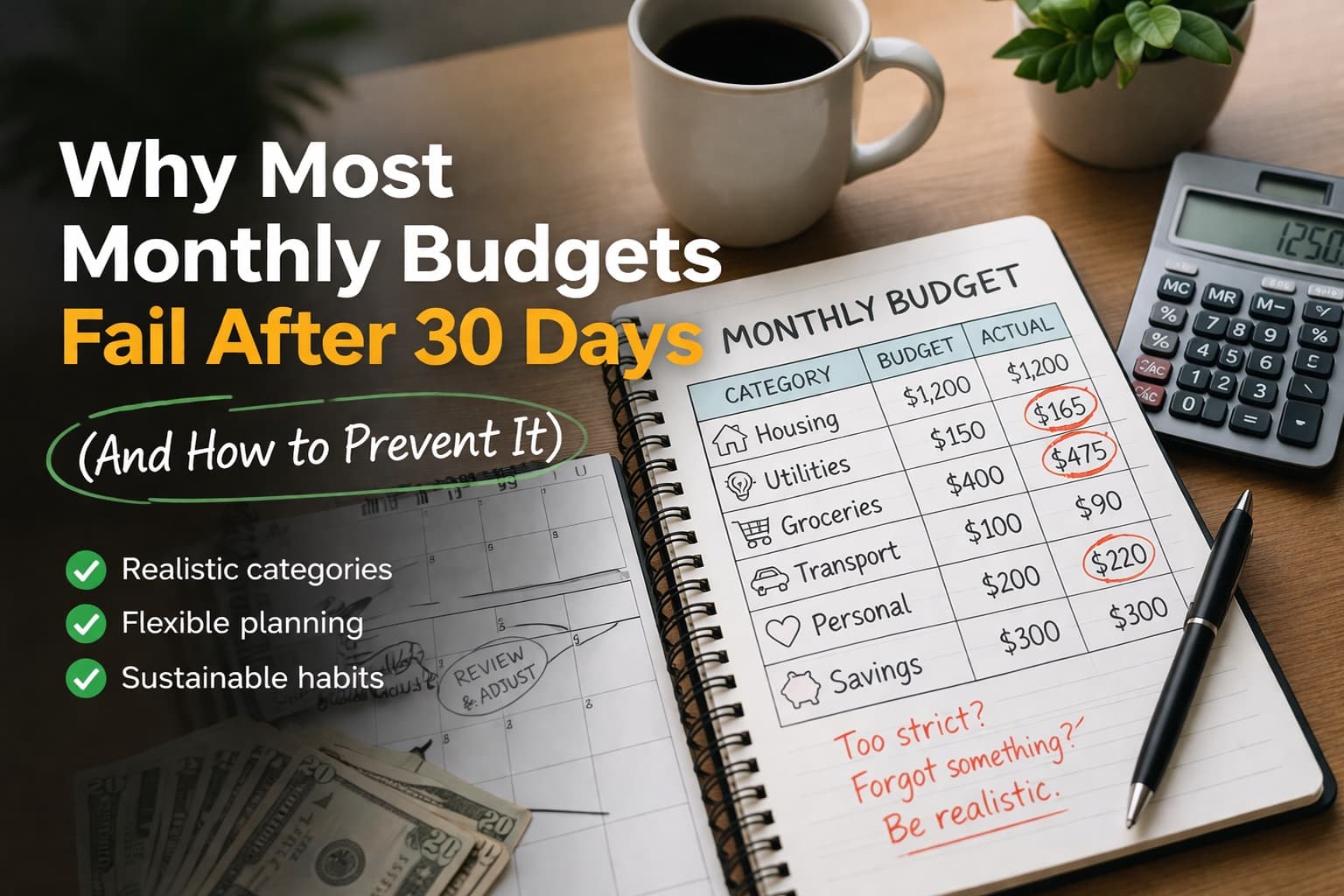
Why Most Monthly Budgets Fail After 30 Days (And How to Prevent It)
Learn why many monthly budgets stop working after the first month and how to build a budgeting system that stays realistic, flexible, and sustainable over time.
Creating a monthly budget often begins with genuine motivation. There is usually a specific reason behind it: a growing feeling that money disappears too quickly, frustration after checking account balances near the end of the month, concern that savings are not growing, or simply the desire to understand everyday spending more clearly. At the beginning, budgeting often feels productive because for the first time many expenses are written down, categories are created, and financial decisions appear easier to organise.
The first month usually brings a sense of control. Income is visible, fixed obligations are listed, and there is often optimism that a clearer system will immediately improve how money is managed. Yet despite that promising start, many people notice a familiar pattern: after several weeks, the budget begins to feel less precise, updates happen less often, and eventually the system is quietly abandoned.
This rarely happens because budgeting itself does not work. More often, the first budget is built around ideal behaviour rather than real financial behaviour.
The First Budget Often Reflects Optimism More Than Reality
A very common reason budgets fail early is that people naturally want immediate improvement. When someone finally decides to organise their finances, there is often a strong impulse to tighten spending quickly and make visible progress right away.
This usually means that grocery limits are reduced aggressively, personal spending is almost removed, dining out disappears from the plan, and discretionary categories become much smaller than they have realistically been in recent months. On paper this creates a disciplined-looking budget, but in daily life it often leaves little room for normal routines.
The problem usually becomes visible not through major spending mistakes, but through ordinary situations. A slightly more expensive grocery week, a pharmacy visit, fuel costs, a school payment, or an unexpected household purchase can immediately disturb categories that were already too narrow.
When this happens, many people interpret it as failure, even though the spending itself may be completely normal.
A Budget Begins to Break When Normal Spending Feels Like a Mistake
One of the less obvious reasons budgeting becomes difficult after the first month is emotional pressure.
If every purchase outside the exact plan starts feeling like a mistake, budgeting quickly becomes exhausting. Small deviations begin to carry more psychological weight than they deserve. A coffee bought during a busy day, a meal outside the home, a small family-related cost, or a practical purchase for the house should not automatically create the feeling that the entire month has gone wrong.
Yet rigid budgets often produce exactly that reaction.
This is where many people stop updating the budget entirely. Not because spending became irresponsible, but because opening the budget starts to feel uncomfortable. The system no longer feels helpful, it begins to feel judgmental.
A strong monthly budget should create visibility, not guilt.
Irregular Expenses Are Often Missing From the First Version
Another major reason budgets fail after thirty days is that many irregular expenses are not included at all in the initial plan.
Most people naturally begin by listing fixed costs because they are obvious and easy to calculate. Housing, utilities, transport, subscriptions, and groceries usually appear first. These categories create the foundation of the budget and often make it look complete.
However, many ordinary costs do not arrive on a perfectly monthly schedule.
A pharmacy visit, a school payment, replacing something at home, a gift, a seasonal purchase, a small repair, or an annual fee may not appear every month, but they are still part of normal financial life. When they are missing from the budget, the first irregular expense immediately creates pressure.
The problem is not that life became unpredictable. The problem is that the budget assumed life would be more stable than it really is.
Too Much Detail Can Quietly Destroy Consistency
Many people also assume that a better budget must automatically be more detailed. As a result, the first version often contains too many categories, too many subcategories, and too many decisions around where every expense belongs.
At first, this can feel organised and satisfying. Every purchase has a place, every category looks precise, and the budget appears highly controlled.
But after several weeks, this level of detail often becomes tiring.
Every small purchase requires more attention than necessary. Updating the budget starts taking longer. Busy days make it easy to postpone. Once several days are skipped, catching up feels inconvenient, and the system gradually loses momentum.
In practice, many successful budgets remain relatively simple. The goal is not perfect accounting. The goal is understanding patterns clearly enough to support better decisions.
A budget should be easy enough to maintain even during ordinary busy weeks.
Savings Targets Often Become Too Aggressive Too Early
Savings can also become a hidden source of early budget failure.
At the beginning, motivation is high, and many people want the budget to deliver visible financial progress immediately. This often leads to ambitious savings targets that look responsible but leave too little room for daily flexibility.
When too much money is assigned to savings from the start, ordinary categories become strained. Groceries, transport, personal spending, and irregular expenses begin competing directly with a target that may have been set too high for the current stage.
Then every unexpected expense feels like a threat to progress.
In reality, smaller savings that continue consistently usually create stronger financial habits than aggressive targets that collapse after a few months.
A sustainable budget allows savings to grow gradually instead of creating pressure immediately.
The First Month Should Be Treated as Information, Not Judgment
One of the healthiest ways to approach budgeting is to see the first month as useful information rather than proof that the system works or fails.
Very few first budgets are accurate immediately.
The first month usually reveals where estimates were unrealistic, which categories were too broad, which costs were forgotten, and where spending naturally behaves differently than expected.
If groceries consistently exceed the planned number, that does not automatically mean there is a problem. It may simply mean the estimate needs adjustment. If household spending appears more often than expected, that category may need clearer space.
Budgets improve when they become honest reflections of real life instead of ideal versions of behaviour.
Long-Term Budgeting Depends More on Ease Than Motivation
The strongest budgeting systems usually do not depend on motivation staying high.
Motivation naturally fades because budgeting eventually becomes routine rather than a new project. That is normal.
What matters more is whether the system remains easy when enthusiasm is lower. If updating the budget takes too much effort, requires too much detail, or creates too much emotional resistance, consistency becomes difficult.
This is why simple systems often outperform highly ambitious ones.
A good monthly budget should still feel manageable during stressful weeks, ordinary months, and imperfect periods when finances are not the centre of attention.
Final Thoughts
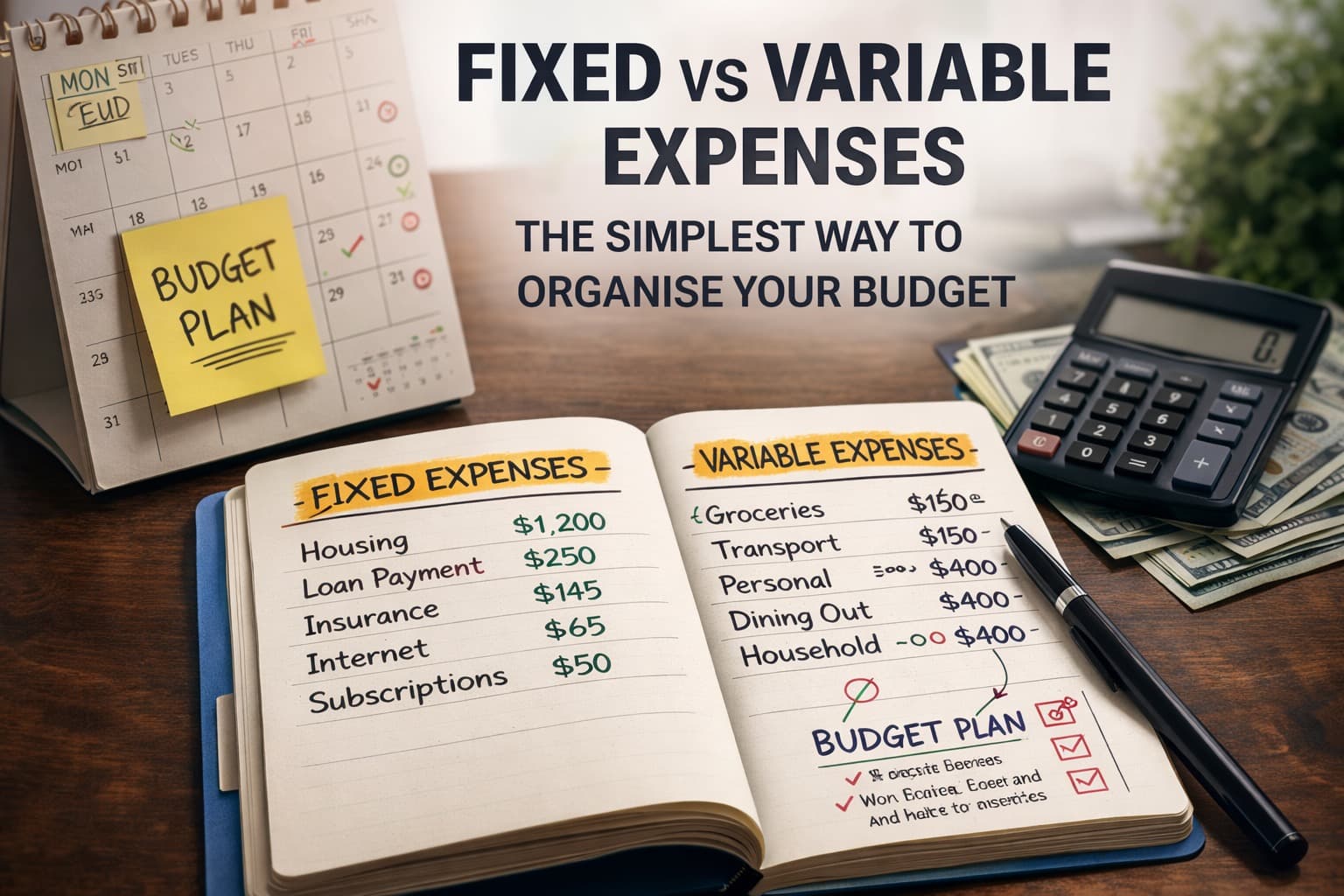
Many budgets fail not because the plan is wrong, but because the structure underneath it is incomplete. A strong place to improve that structure is understanding Monthly Budget Categories Explained: Essential Categories for a Realistic Budget, where category design becomes much easier to apply in real life. You may also benefit from learning Fixed vs Variable Expenses: The Simplest Way to Organise Your Budget, especially if monthly spending feels difficult to predict.