How to Reset a Budget After a Bad Month Without Starting Over
Learn how to recover from a difficult budgeting month without rebuilding your financial system from scratch.
A bad month financially often creates a stronger emotional reaction than the numbers themselves justify. One unexpected bill, a period of irregular spending, travel costs, school expenses, seasonal purchases, or simple loss of routine can quickly create the feeling that an entire budget has failed. Many people respond to this by trying to rebuild everything immediately. They open spreadsheets, rewrite categories, cut multiple spending areas at once, or decide that the previous system no longer works. In many cases, this reaction creates more instability than the original overspending itself. A difficult month does not usually require a completely new budget. In many cases, the stronger solution is simplifying what already exists. Budgeting Without Burnout: How to Build a System You Can Actually Maintain explains how sustainable systems are often less complicated than expected. You may also want to revisit Why Tracking Every Expense Is Not Always the Best Budgeting Strategy if tracking itself has become part of the problem. The first important step after a difficult month is separating one-time disruption from structural problems. Not every overspend means that the budgeting method needs replacement. Sometimes a month contains irregular costs that would challenge any financial plan: medical expenses, family events, car repairs, higher utility bills, school-related payments, or travel obligations. When these events happen, the goal should not be perfection in hindsight. The goal should be understanding what belongs to ordinary monthly patterns and what belongs to temporary deviation. Without this distinction, people often overcorrect.
A Bad Month Becomes Dangerous Only When It Changes the Next Month
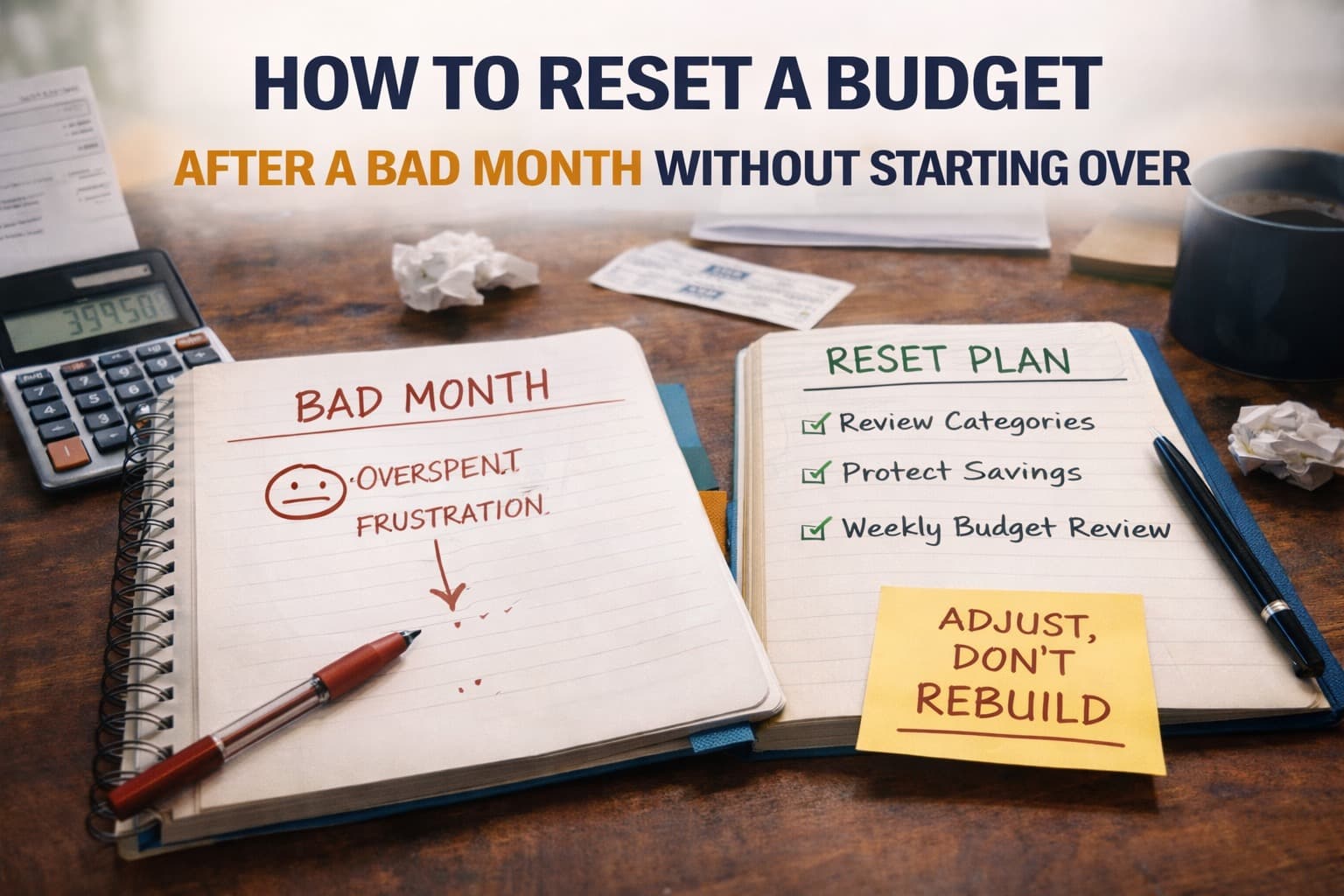
The most common budgeting mistake after overspending is carrying emotional pressure directly into the following month. When guilt enters financial planning, decisions often become too aggressive. Spending categories are reduced unrealistically. Daily flexibility disappears. A person tries to "recover" immediately instead of stabilizing first. This often leads to another difficult month because the new budget no longer reflects real daily life. A better reset begins by protecting normal structure first. Fixed obligations should remain untouched unless there is a true structural reason to review them. Housing, transport, debt, subscriptions, and necessary living costs should stay visible exactly as they are. The next step is reviewing variable spending calmly rather than reactively. A difficult month usually needs adjustment, not punishment.
The Most Useful Question Is What Actually Changed
After an unstable month, it helps to review what happened in simple practical terms. Did grocery spending rise because prices increased or because eating habits changed? Was transport higher because of temporary travel? Did discretionary spending increase because routines became less organized? Was saving interrupted because of a one-time event or because the budget was already too tight? These questions matter because they separate pattern from noise. If an increase belongs to normal life, then future categories may need recalibration. If it belongs to a one-time event, then the system itself may already be working correctly. This is why reviewing context matters more than reacting to totals.
Resetting Works Better When Categories Stay Familiar
Many people abandon good budgeting habits because they redesign categories too often. After one difficult month, categories suddenly multiply or disappear entirely. The system becomes unfamiliar again, and budgeting loses continuity. A stronger approach is keeping the same structure while adjusting only what clearly needs attention. If groceries were consistently underestimated, that category should become more realistic. If discretionary spending repeatedly absorbs planned savings, then the issue may not be discipline but category honesty. Budgets usually improve faster when categories evolve slowly rather than being rebuilt repeatedly. Familiar structure creates less resistance.
Savings Should Not Disappear Completely During Reset Months
Another common reaction after overspending is pausing savings entirely until the budget feels normal again. This often creates a second problem: the financial system now becomes dependent on ideal months before future goals continue. Even a smaller saving amount often matters more than stopping completely. A reduced contribution keeps the habit alive. It also protects the psychological connection between budgeting and forward movement. Many strong budgets survive difficult periods because habits remain visible even when amounts temporarily change. The continuity matters more than the perfect figure.
Weekly Correction Works Better Than Monthly Frustration
A bad month often feels heavy because problems are only noticed after the month ends. This is why weekly review becomes especially useful during recovery periods. Weekly correction allows small changes before they accumulate emotionally. A spending category can be adjusted while there is still room inside the month rather than after totals already feel disappointing. This also reduces the feeling that one mistake defines the entire month. A budget becomes much easier to trust when adjustments happen during movement instead of only after the result appears.
Financial Stability Depends More on Recovery Than Perfection
No budget remains perfect across every month. Income changes, household routines shift, costs appear unexpectedly, and motivation naturally fluctuates. What usually separates sustainable budgeting from repeated abandonment is not perfect control but recovery speed. A system that allows imperfect months without collapse becomes far more valuable over time than one that only works under ideal conditions. The strongest financial habits usually belong to people who know how to continue after disruption without restarting completely. A difficult month is not evidence of failure. It is often simply part of how real budgeting looks when applied to ordinary life.