The 50/30/20 Budgeting Rule: A Complete, Practical Guide
A clear, honest guide to the 50/30/20 rule — how to split your take-home pay into needs, wants and savings, with a worked example and the real limitations.
Most budgeting advice fails for the same reason: it asks you to track dozens of categories, predict every expense and have the discipline of a monk. The 50/30/20 rule is popular precisely because it does the opposite. It gives you three buckets, three percentages and a structure simple enough to remember in the supermarket queue.
It will not suit everyone, and we will be honest about where it falls down. But as a starting framework — especially if you have never stuck to a budget before — it is one of the most sensible approaches around.
This guide explains what the rule is, where it came from, how to calculate each bucket from your own income, and how to adapt it when the standard split does not quite fit your life.
What the 50/30/20 rule actually is
The 50/30/20 rule divides your **take-home (after-tax) income** into three parts:
- 50% on needs — the essentials you cannot reasonably avoid
- 30% on wants — the things that make life enjoyable but are optional
- 20% on savings and debt repayment — building security and clearing what you owe
That is the whole framework. There are no spreadsheets full of sub-categories to maintain, no envelope system to police. You sort your spending into three groups and check, roughly, that the proportions hold over a month.
The point of the percentages is not precision. It is **proportion**. The rule encodes a simple, defensible idea: roughly half your money keeps the lights on, a third is yours to enjoy guilt-free, and a fifth quietly builds your future. If your savings bucket is consistently empty, the rule makes that impossible to ignore.
Where the rule came from
The 50/30/20 rule was popularised by **Elizabeth Warren** — the US bankruptcy law professor who later became a senator — and her daughter **Amelia Warren Tyagi**, in their 2005 book *All Your Worth: The Ultimate Lifetime Money Plan*.
Their original framing was slightly different from the version that circulates online today. They described a "balanced money formula" built around keeping your **"must-haves" (needs) to around 50% of after-tax income**, your **savings at around 20%**, and leaving the rest — roughly 30% — for **"wants"**. Their core insight was that if your essential commitments stay under about half your income, you keep enough breathing room to handle life without sliding into debt.
That origin matters. The rule was not invented as a get-rich scheme or a rigid diet. It came out of research into why ordinary households end up in financial trouble, and the answer was usually the same: fixed essential costs had crept too high, leaving no slack. The 50% ceiling on needs is the part people most often forget — and arguably the most useful part of the whole idea.
How to calculate your three buckets
Start with one number: your **monthly take-home pay** — what actually lands in your account after income tax and National Insurance. Then:
- Needs = take-home pay × 0.50
- Wants = take-home pay × 0.30
- Savings and debt = take-home pay × 0.20
The rule works in any currency — pounds, euros, dollars — because it is built on proportions, not amounts. We will use British pounds for the example below.
If your income varies month to month (freelance work, commission, shift patterns), use a **conservative average** of the last three to six months rather than your best month. Budgeting to your highest month is one of the classic reasons most budgets fail after thirty days.
A worked example
Imagine **Priya**, who takes home **£2,500 a month** after tax. Applying the rule:
| Bucket | Share | Monthly amount | What it covers |
|---|---|---|---|
| Needs | 50% | £1,250 | Rent, utilities, minimum debt payments, food, transport, insurance |
| Wants | 30% | £750 | Eating out, subscriptions, hobbies, holidays, non-essential shopping |
| Savings & debt | 20% | £500 | Emergency fund, pension top-ups, overpaying debt |
So Priya aims to keep essentials at or below £1,250, has £750 for the discretionary parts of life, and directs £500 towards savings and clearing debt faster.
Now suppose her rent and bills alone come to £1,400 — already over the £1,250 "needs" ceiling. This is exactly the signal the rule is designed to send. It does not mean Priya has failed; it means her fixed costs are high relative to her income, and the realistic adjustment is to take the extra from the **wants** bucket. She might run a 56/24/20 split for now, protecting her 20% savings while she looks for ways to bring housing costs down. The framework bends — it does not break.
Needs versus wants: the part everyone argues about
The hardest part of the 50/30/20 rule is not the maths. It is deciding what counts as a need.
A genuine **need** is something you would struggle to function without, and where the basic version is non-negotiable:
- Housing (rent or mortgage)
- Utilities — gas, electricity, water, a basic phone and internet connection
- Groceries (the essential kind)
- Transport to work
- Minimum debt repayments
- Insurance you are required to hold
A **want** is the upgraded, optional or pleasurable version of something:
- The streaming bundle, not the broadband itself
- Dining out, not the weekly food shop
- The premium gym, not movement in general
- A newer car than you strictly need
The grey areas
Plenty of spending sits awkwardly between the two, and reasonable people disagree:
- Food. Basic groceries are a need; the artisan coffee and the meal-deal-every-lunchtime habit are wants.
- Phone. Having a working phone is a need; the latest handset on a £60 contract is partly a want.
- A car. A need if there is no public transport to your job; closer to a want if you are paying for a model well above your practical requirements.
- Healthcare and childcare. Often genuine needs, though the specifics vary enormously by household.
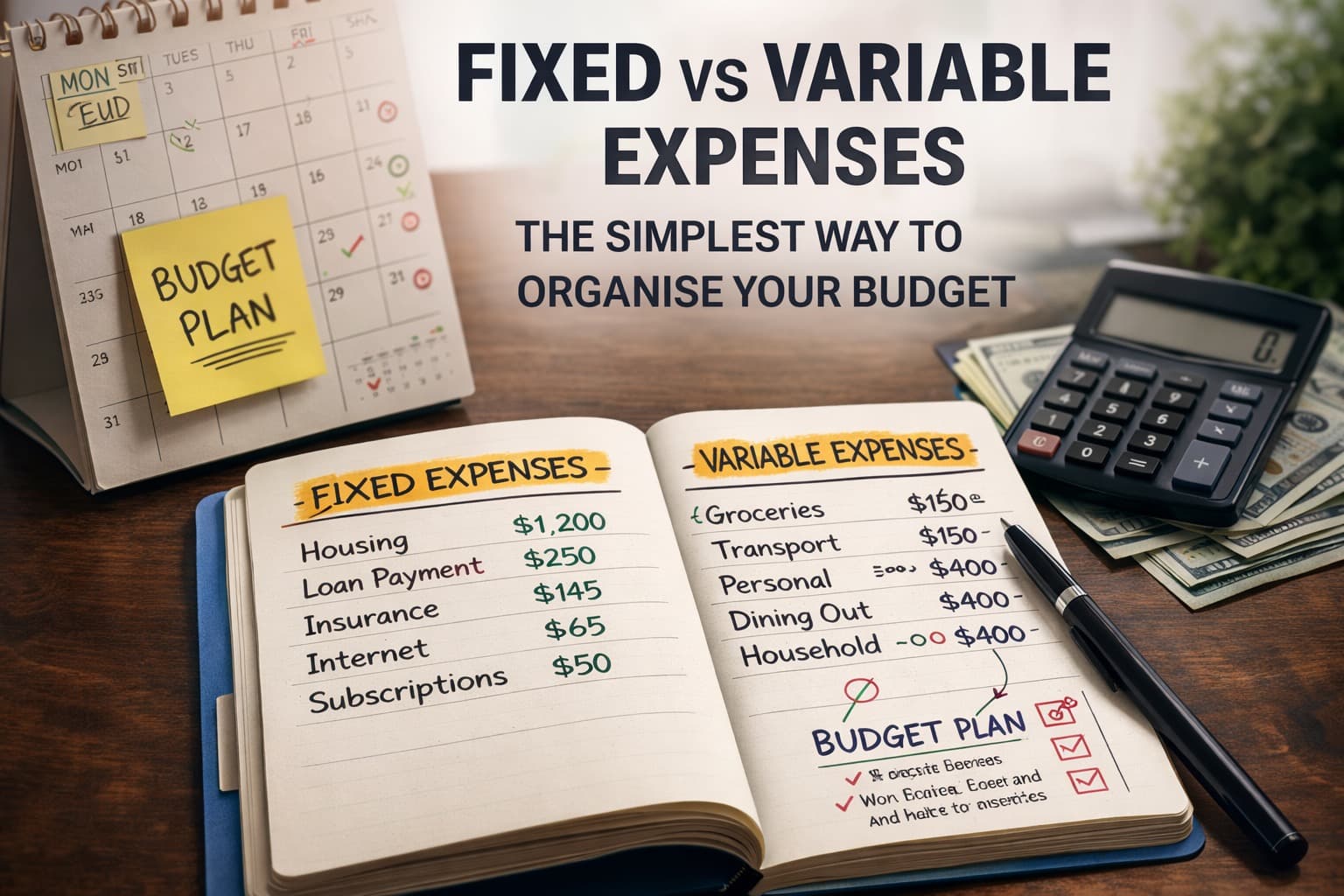
The honest test is to ask: *"If money were suddenly very tight, would I cut this without a second thought?"* If yes, it is a want. If splitting hairs over a particular item takes more than a few seconds, put it where it feels right and move on — consistency matters more than perfection. If you want a fuller treatment of this, our guide to monthly budget categories explained walks through how to sort spending cleanly, and fixed versus variable expenses covers a related distinction that often gets confused with needs versus wants.
The advantages of the 50/30/20 rule
The rule has endured for good reasons:
- It is genuinely simple. Three buckets are easy to remember and easy to explain to a partner, which makes it far more likely to survive contact with real life.
- It builds saving in from the start. Because 20% is allocated before you reach the end of the month, savings stop being "whatever is left" — which, as we cover in how to budget for savings, is usually nothing.
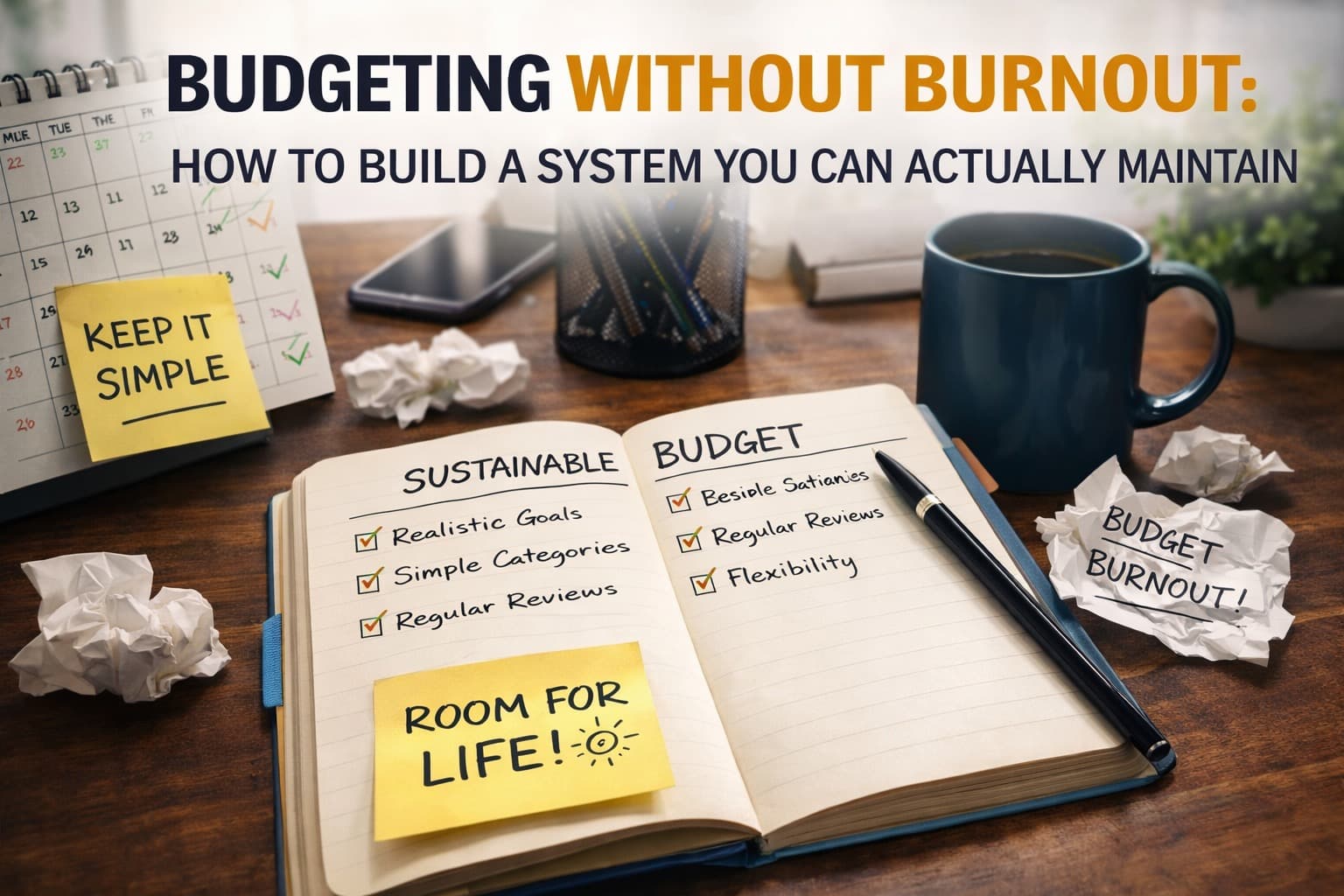
- It protects guilt-free spending. The 30% wants bucket is a feature, not a flaw. A budget with no room for enjoyment is one you abandon, which is why budgeting without burnout matters as much as the numbers.
- It flags structural problems early. If needs blow past 50%, that is valuable information about your fixed costs, not a personal failing.
- It scales. The same three percentages work whether you earn £1,500 or £15,000 a month.
The real limitations
This is YMYL territory, so let us be straight about where the rule struggles.
**It is hard in high-cost-of-living areas.** In expensive cities, rent alone can swallow 40–50% of take-home pay before a single other essential is counted. Keeping all needs under 50% may be mathematically impossible, not a matter of discipline.
**It is hard on low incomes.** When money is genuinely tight, needs naturally take up a far larger share simply because the essentials cost what they cost. Demanding a 20% savings rate from someone for whom essentials already consume 80% of income is not realistic, and pretending otherwise is unhelpful.
**It can be too gentle if you want to save aggressively.** If you are chasing early retirement or a large deposit, a 20% savings rate may feel slow. Many people in that position deliberately push savings to 30% or 40% and shrink the wants bucket.
**The "after-tax" definition gets complicated.** The rule assumes a clean take-home figure, but real pay slips are messier:
- Pensions. If contributions are taken from your pay *before* it reaches your account, you are arguably already saving — some people count that towards the 20%, others treat the rule as applying only to the cash that actually lands and run their pension on top. Either is defensible; just be consistent.
- Benefits and tax credits. These count as income for the purposes of the rule, but can be irregular, which makes averaging important.
- Salary sacrifice, student loan deductions and variable bonuses all blur the line between "take-home" and "gross". Decide your own definition once and stick to it.
**It is a guideline, not a law.** The percentages are a sensible default, not a target you have failed if you miss by a few points.
Sensible variations
Because the rule is about proportion, you can adjust the dials to fit your circumstances without abandoning the idea.
| Variation | Needs | Wants | Savings & debt | Best for |
|---|---|---|---|---|
| 50/30/20 | 50% | 30% | 20% | The standard balanced starting point |
| 60/30/10 | 60% | 30% | 10% | High living costs or lower incomes where needs are unavoidably large |
| 70/20/10 | 70% | 20% | 10% | Tight budgets where essentials dominate |
| 80/0/20 | 80% | 0% | 20% | Short, intense debt-clearing or saving sprints |
| 50/20/30 | 50% | 20% | 30% | Aggressive savers and those overpaying debt fast |
The principle is the same throughout: **decide your three numbers deliberately, then let the buckets keep you honest.** A 70/20/10 split that you actually follow beats a 50/30/20 split you abandon in week three.
If even three buckets feel too loose and you want every pound assigned a specific job, you may prefer a more granular method — our sibling guide, Zero-Based Budgeting: How to Give Every Pound a Job, explains an approach that pairs well with, or replaces, the 50/30/20 rule depending on your temperament.
Who it suits — and who it does not
**The 50/30/20 rule suits you if:**
- You are new to budgeting and want something you will actually stick to
- You find detailed tracking overwhelming and have abandoned budgets before
- Your income comfortably covers essentials with room to spare
- You want a quick way to sanity-check whether your fixed costs have crept too high
**It is a poor fit if:**
- Your essentials already exceed 70–80% of take-home pay
- You have very irregular income and need tighter, per-pound control
- You are pursuing aggressive savings goals that need a custom split
- You genuinely enjoy granular tracking and want every category itemised
How to apply it with the budget planner
You do not need a spreadsheet to run the 50/30/20 rule. You can set it up in a few minutes with the free Buxee budget planner, which works entirely in your browser with no sign-up and keeps your figures on your device.
A simple way to start:
1. **Enter your take-home pay** as your income — the figure that actually reaches your account. 2. **Calculate your three targets** — half for needs, just under a third for wants, a fifth for savings and debt. 3. **Sort your usual spending** into the three buckets, using the needs-versus-wants test above for anything ambiguous. 4. **Compare reality with your targets.** If needs are over 50%, decide whether to trim them or temporarily borrow from wants. 5. **Review monthly**, not daily — the rule rewards a light touch. If you want a calmer routine, how to track monthly expenses without feeling overwhelmed pairs neatly with this method.
If you would rather build the whole thing from scratch and understand each step, our walkthrough on how to create a monthly budget that actually works puts the 50/30/20 rule into a complete routine.
---
*This article is general educational information, not personalised financial advice. Your circumstances are unique, and you should consider your own situation — or speak to a qualified, regulated adviser — before making significant financial decisions.*